 Introdans: 'The Green Table'
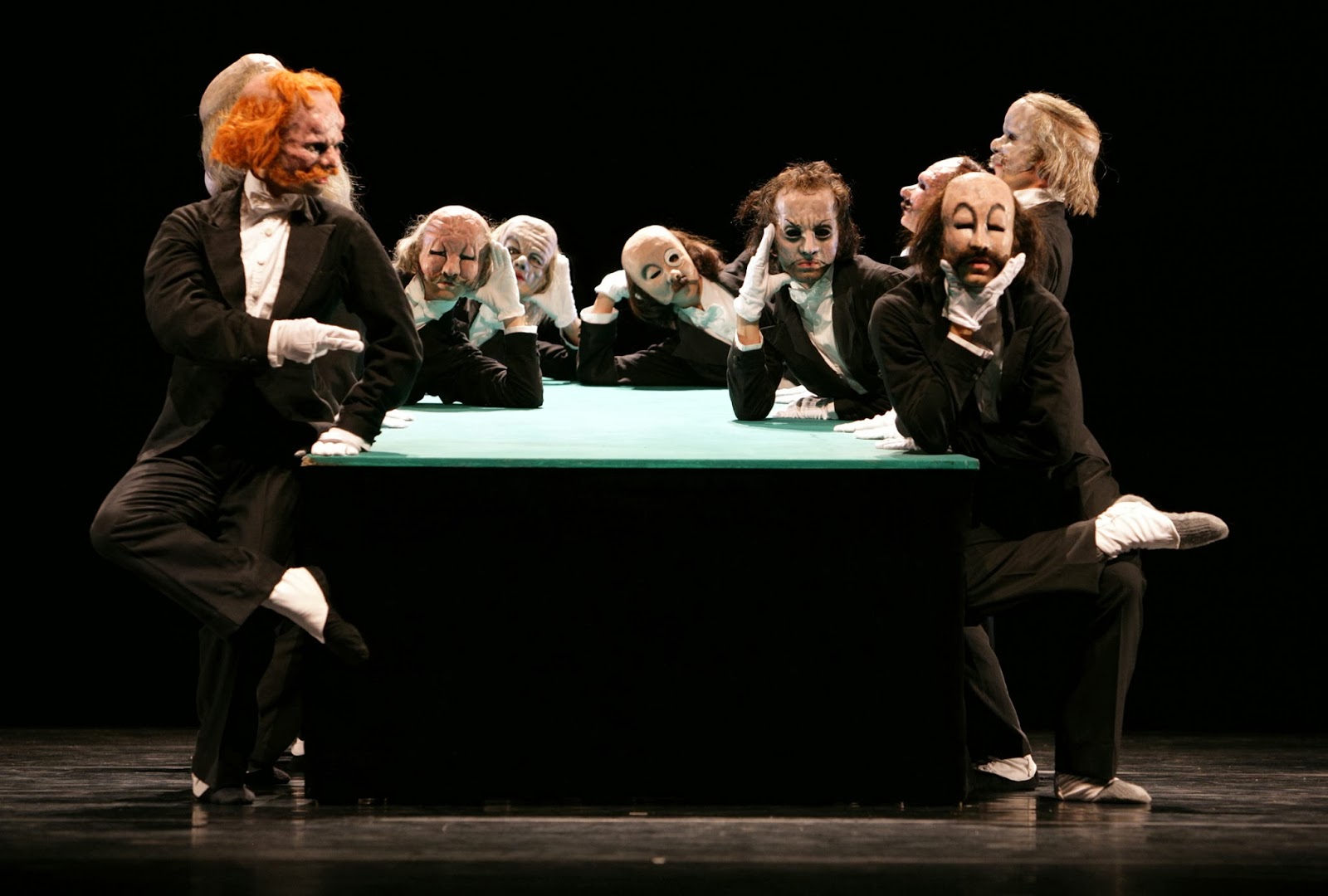
Part of the 'Oorlog en Vrede' performance.
September
the 22nd 20:15, the curtains are opening and I am about to check out
the new Introdans performance ‘Oorlog en Vrede’. I am sitting frontrow at the
Schouwburg in Arnhem, so I can easily see all the fast feet work that is about
to be unleashed upon me. But I was not there for the first act. I came to see one
of world’s most infamous modern dance pieces named ‘The Green Table’, which is
being performed by Introdans tonight.
‘The Green
Table’ is often being defined as a monument of modern dance history. The piece
was created by Kurt Jooss in December 1931, in 1932 he won the International
Competition of Choreography in Paris with this piece. The piece opens with,
what appears to be, diplomats or politics (The gentlemen in Black) who are having
a discussion around a table covered with a green cloth. The discussion heads up
and they pull their guns out, this symbolizes the declaration of war. The following
scenes are showing us the horrors that war causes, these scenes have names. The
Farewells (loved ones getting separated), The Battle and The Partisan (war
itself), The Refugees, The Brothel (the emptiness) and The Aftermath
(heartbroken and wounded survivors). It ends with the ‘Gentlemen in Black’
still discussing politics like nothing had happened before. Noticeable is ‘Death’
throughout the scenes, he is portrayed as a skeleton who moves very staccato and
robot like and claims his victims of the war. With the ending being the
beginning Jooss shows us that he has no faith in the negotiations of the
diplomats and comments on the war/politics as being meaningless, useless and
causing much horror in society.
Back to
September the 22nd, the curtains are opening and the second halve of
the night is about to start. It begins with this typical tango music which
really gets stuck in your head and of course the ‘Gentlemen in Black’ are
onstage having their argument. But directly noticeable for me were the politic
aspects in the piece, as I described above. As silly and harmless the
discussion of the men around the green table looked like, as sad, rude and hard
the next scenes were. The use of pantomime during the ‘Gentlemen in Black’ scenes
made the argument seem really silly, light and harmless. But the use of
expressionistic Austrucktanz in the six scenes between the beginning and the
end made it really clear what horror the war causes. As already have been said
before, the robot-like movement of the person who appears to be ‘Death’ was very
fitting to the character, because the movements made him as inhuman as ‘Death’
is.
This piece
was made in 1931, the time of expressionism, social realism and the interbellum.
Kurt Jooss combined all these factors in this work of art and that’s why it’s a
monument in modern dance history. His work was very socially engaged, which is
recognizable in the thematic, and the movements were very affected by
expressionism, which comes from the heart and shows emotion. Through these
movements he could easily show the pain that the war is/was causing. Even the
use of a playful tango music was well over thought because it negates the
seriousness of the discussion of the diplomats, Kurt Jooss points out the
corruption in politcs.
The dancers did their bowings, the curtains closed and I had an amazing night. If you are interested in more than just a dance piece without any social engagement in it, I can really recommend you to check out this piece. Introdans is doing a great job performing it and the dancing is as powerful as the theme is. This piece made me over think the concept of war again and I realized that it is indeed unnecessarily, full with corruption and only causing more harm than good. This piece is so socially engaged that I really had the feeling that I was getting sucked into it and understood clearly the commentary of the creator.
I can truly understand why people call this a monument of modern dance!
Reviewed by Wouter Vertogen
The dancers did their bowings, the curtains closed and I had an amazing night. If you are interested in more than just a dance piece without any social engagement in it, I can really recommend you to check out this piece. Introdans is doing a great job performing it and the dancing is as powerful as the theme is. This piece made me over think the concept of war again and I realized that it is indeed unnecessarily, full with corruption and only causing more harm than good. This piece is so socially engaged that I really had the feeling that I was getting sucked into it and understood clearly the commentary of the creator.
I can truly understand why people call this a monument of modern dance!
Reviewed by Wouter Vertogen

